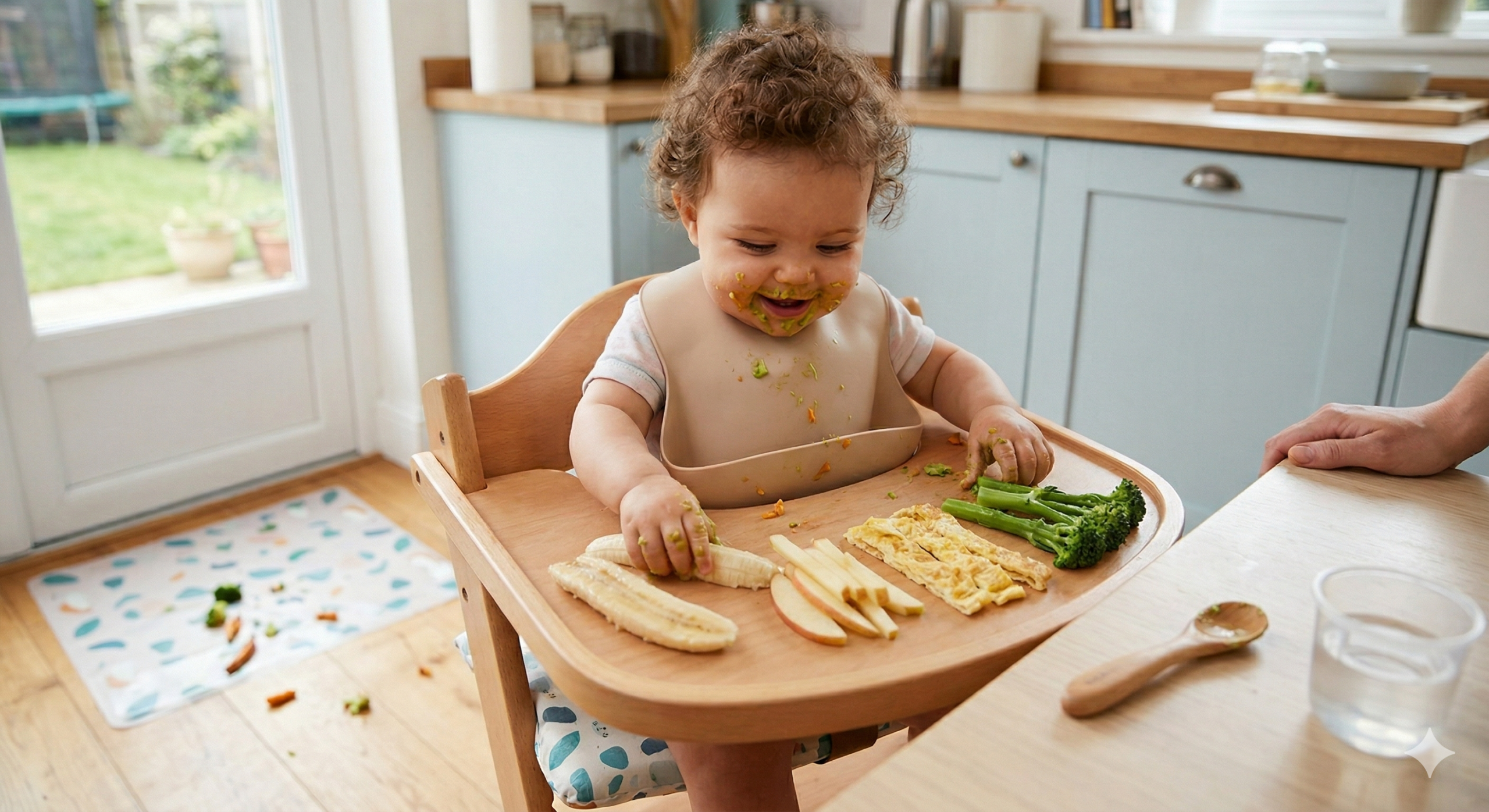
When I first heard about baby led weaning, I have no idea what it is. I shall not bore you with something that you can easily read off the various sources on the Internet or other sources but essentially, Baby-Led Weaning (BLW) is a popular alternative to traditional spoon-feeding that skips purees entirely, allowing babies to feed themselves solid finger foods from the very start. It treats mealtime as a sensory exploration rather than just a caloric intake event. Here, I want to share with you our top 5 baby led weaning foods that you already have at home and are inexpensive!
Before we start: safety basics
I’m not going to sugarcoat this. The number one fear with baby led weaning is choking, and it’s a completely valid concern. So before we get into the food list, a few non-negotiable safety rules:
Always supervise your baby while they eat:
NO exceptions. Not even for 30 seconds. Know the difference between gagging and choking. Gagging is loud, dramatic, and normal — your baby’s gag reflex is much further forward on their tongue than yours, so they’ll gag on things that wouldn’t bother an adult. It looks scary but it’s actually a safety mechanism. Choking is silent. If your baby is making noise and coughing, they’re handling it. If they go silent and their face changes colour, that’s when you act.
Do you need to know infant CPR before you start BLW?
Honestly, you should take some class for infant CPR or at least watch a video on infant CPR. Personally, its a scary thought to perform CPR on your baby knowing all the risks involved in CPR if applied wrongly. But its better to know how to execute it than to not know at all.
Cut foods into safe shapes
For babies just starting out, the safest shape is a finger-length stick, roughly the size of your pinky finger. This lets them grip it in their fist with a piece sticking out to gnaw on. Avoid round, hard foods (whole grapes, cherry tomatoes, nuts, raw carrot coins) — these are the most common choking hazards.
Now, onto the food.
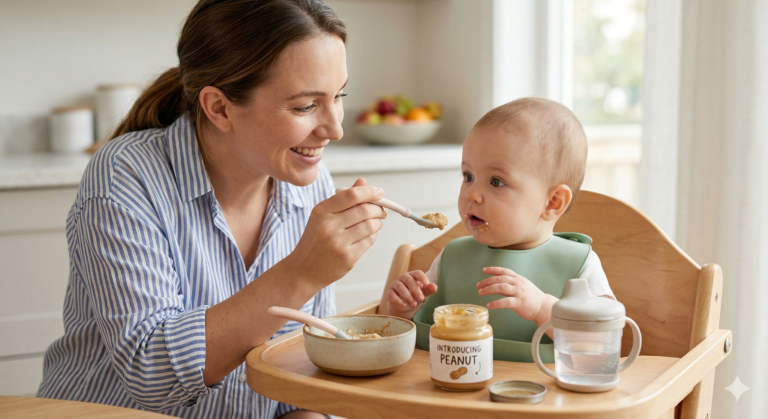
We recommend that you introduce allergens to your baby early to help them overcome these allergens later when they grow bigger, we compiled a step by step guide here to introduce allergens to babies.
1. Banana — The Easiest First Food That Exists
There’s a reason every BLW guide starts with banana. It’s soft. It’s sweet. It requires literally zero cooking. And your baby can hold it themselves from day one.
Why does banana work so well?
Banana is one of the few foods that ticks every box for a baby led weaning first food as it has a soft texture and soft enough to gum without teeth, firm enough to hold without disintegrating immediately and it is naturally sweet which babies prefer. It is also packed with potassium, vitamin B6, C and fibre. And best of all, it requires no cooking, steaming or any prep tools.
However, you should know that bananas are sticky and with the way babies eat – grabbing the food and sticking it in their mouths for awhile while they gnaw on it with their incisors, it will take remain on their hands for awhile. This will lead to a lot of saliva oozing onto their hands and mixing with the banana, creating a perfect recipe for a mess as their hands will touch anything that they can lay hands on. Thankfully, it washes off easily and a damp cloth is all you need.
How to prepare the banana for BLW?
Cut the banana in half. Leave the bottom half of the peel on — this gives your baby a “handle” to grip, since peeled banana is slippery. They’ll gnaw on the exposed top half while holding the peel. As they get older (around 7-8 months), you can consider to peel it fully and cut into finger-length spears. For even older infants (9 months and above), you can slice the bananas into small chunks that they can pick up.
2. Sweet potato – the nutrient powerhouse
Sweet potatoes are rich in carbohydrates, fiber, potassium, and zinc. They also offer vitamins A, B6, C, E and K. Sweet potatoes also have a creamy, mashable consistency which is great for babies who are still learning to move food around their mouths. And if a piece is too big, they can easily gum it down into a safe texture, reducing the risk of choking. We love sweet potatoes also because they are sweet and the natural sugars in them make them an easy “win” for babies.
How to prepare for BLW
We love to roast our sweet potatoes because it makes the outside easier to hold while inside stays creamy. First, peel the potato and cut it into long, thick wedges and you can add some baby safe spices like cinnamon or cumin then bake it at 200 deg celsius for about 25-30 minutes. Test that it is ready by pressing a wedge between your thumb and forefinger and it should smash easily with gentle pressure. If you want it even softer, then steaming is probably the gentlest way to go. Steam the strips for about 10-15minutes until very tender.
3. Eggs (omelette strips) – please note that this is an allergen
Eggs are nutritious as it is an excellent source of proteins and fat, including DHA, a type of omega 3 fatty acid. Eggs also contain choline, iodine, iron in addition to vitamins A, B12 and D. These nutrients support growth, development, brain health, red blood cell functioning, immunity, taste perception, metabolic process, bone density, and many other functions. As an allergen – introduce early, ensure well-cooked and start with small quantities.
How to prepare for BLW
Crack 1 or 2 eggs into a bowl and whisk thoroughly. You can add a splash of breast milk or water for extra fluffiness. Then warm a small non-stick skillet over medium-low heat with a tiny bit of butter or oil. Pour the eggs in and let them spread to the edges. Cover the pan with a lid for 1–2 minutes. This “steams” the top so you don’t have to worry about a messy flip, ensuring the egg is fully cooked (important for babies!). Slide the omelette onto a cutting board. Once cooled, cut it into strips about the width of two adult fingers.
And since you are already working on sweet potatoes, you can combine them! You can finely chop some steamed spinach and mix it into the whisked egg then mash a little bit of leftover cooked sweet potato and whisk it into the egg before frying. This adds a nice sweetness and makes the strip even sturdier. Finally, if the egg feels too slippery, you can sprinkle a little nutritional yeast or finely ground oats into the batter.
If your baby is allergic to eggs, check out our experience here on how we try to cook up something to help our little one overcome his egg allergy!
4. Broccoli
Broccoli is an excellent source of vitamin A, which supports eye health. Broccoli also contains vitamin B6 and folate, for growth and brain development, as well as fiber for healthy digestion.
How to prepare for BLW?
Steam or microwave broccoli (as opposed to boiling) helps retain its nutrients. For 6 months old, the larger pieces of food, the better. Aim for florets with crowns about the width of three adult fingers pressed together. Alternatively, mash or finely chop the florets and let your baby scoop up the food with hands or spoon.
5. Apple (cooked)
Apples offer carbohydrates, fiber, water, potassium, vitamins B6 and C, and antioxidants to help a growing baby thrive. Make sure to avoid apple seeds, as they can be toxic if too many are ingested at once.
How to prepare for BLW?
For 6 months old, peel the apple, cut into thick wedge shapes (about the width of two fingers), and steam for 8-10 minutes until very soft. You should be able to press through a wedge easily with your finger. The wedge shape is easy for small fists to grip. You may choose to remove the skin if you wish. You can also mash cooked apples to make applesauce.



2 Comments