
If you have started looking into introducing allergens to babies, you have probably already hit the wall of conflicting advice. Your parents say wait until age one. The pediatrician says start at four to six months. A parenting forum says do all nine allergens in the first week. Another says go one at a time over three months.
Take a breath. It is not as complicated as the internet makes it sound.
I put together this guide to share our experience with our first child introducing the various allergens to him in a gradual and controlled manner.
Is your baby allergic to eggs? See how we introduce eggs to our egg-allergic baby here!
- When should you introduce allergen to your little one?
- Signs your baby is ready?
- What about high-risk babies?
- The 9 Major Allergens You Need to Know
- Which Allergens to Introduce First
- General rules to introducing allergens to babies
- How to Safely Prepare Each Allergen
- Signs of an Allergic Reaction vs Normal Responses
- Key Takeaways
When should you introduce allergen to your little one?
We asked ourselves the same question when our baby turned 6 months old. Instead of relying on the various hearsays, we went with research backed advice and corroborated the evidence with our pediatrician.
The research paper done by The New England Journal of Medicine [1] shown that early introduction of peanuts – in this case, between 4 and 11 months – greatly reduced the risk of babies developing a peanut allergy by the time they turned 60 months of age. This gave us confidence that we should introduce early and not have to wait till he grew teeth or turned one or whatever.
We consulted with our pediatrician, and he agreed we can start to introduce him. Generally, we advise that when your baby shows signs of readiness for solids, you can begin to introduce him but always confirm with your doctor.
[1] The New England Journal of Medicine
Randomized Trial of Peanut Consumption in Infants at Risk for Peanut Allergy | New England Journal of Medicine
Signs your baby is ready?
- They can sit upright with minimal support
- They have good head and neck control
- They show interest in food (reaching for it, watching you eat, opening their mouth)
- They no longer have the tongue – thrust reflex (ie. no longer automatically push food out of their mouth)
For us, we first introduced rice cereal to our baby because it was the easiest to prepare and high in iron which is very beneficial to babies (will touch more on that later). But factually, introducing allergens to babies does not require waiting until your little one has tried a certain number of “safe” foods first. Once your baby is developmentally ready for solids, allergenic foods can be part of that journey from the start.
Is your baby ready for baby led weaning? If he is, check out our guide here on the top 5 foods we recommend to start them off on this process. These are foods that are inexpensive and you already have them at home.
What about high-risk babies?
Babies that are considered higher risk for food allergies are usually if they have severe eczema, existing food allergy (such as egg allergy) or a close family member with food allergies (eg. parents or siblings).
Severe eczema (atopic dermatitis): Beyond a simple skin rash, severe atopic dermatitis is a distressing condition characterized by persistent inflammation, extreme itching, and painful skin fissures. For children, the impact is profound, often disrupting their sleep, focus, and overall quality of life. Because the symptoms are so intense, professional medical treatment is usually necessary to keep the flare-ups under control.
In cases where your baby falls into the high risk category, it is recommended to introduce allergens earlier – around 4 to 6 months – rather than later. You may also consider allergy testing first, particularly if your baby has severe eczema.
The 9 Major Allergens You Need to Know
These are the nine foods responsible for the vast majority of allergic reactions in children:
- Peanuts
- Eggs
- Cow’s milk
- Tree nuts (Eg. almonds, cashews, walnuts etc)
- Wheat
- Soy
- Sesame
- Fish
- Shellfish
Which Allergens to Introduce First
The strongest research supports prioritizing peanut and egg, as these have the most robust evidence for allergy prevention through early introduction. After that, work through the remaining allergens in whatever order suits your family.
There is no single “correct” order. The important thing is to introduce them all within a reasonable timeframe and keep offering them regularly.
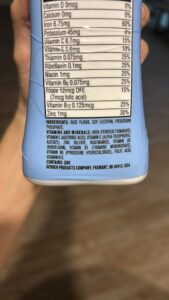
Personally, for us, we introduced our little one baby rice cereal first (soy lecithin). It wasn’t because of the concern about introducing more potent allergens knowing that he is a high-risk baby but rather, we wanted him to get more iron into his body.
Babies begin to lack iron around 6 months of age when the iron stored from the mother starts to deplete. As we mostly breastfed our baby, it becomes even more important for him to receive sufficient iron. By 9 to 24 months, iron deficiency anemia is commonly seen in infants for those that are not consuming sufficient iron-rich foods.

General rules to introducing allergens to babies
- Introduce one new allergen every 2 to 3 days
- Offer it early in the day so you can observe any reactions
- Give in small amount on the first day, then increase the portion over the next day or two
- Once introduced without reaction, keep offering that food at least two to three times per week
How to Safely Prepare Each Allergen
Age-appropriate preparation is critical. The biggest choking risks come from serving allergenic foods in unsafe forms — whole nuts, chunks of hard cheese, or sticky globs of peanut butter.
Gerber cereal (soy):
When we prepared the Gerber cereal for our little one, we mixed breastmilk with the cereal – 1 portion of cereal to 4/5 portions of breastmilk or formula milk and 1 portion is usually 1 tablespoon of cereal. Do note that Gerber rice cereal contains soy lecithin and also states that it contains soy, however, the amount of soy is most likely very minimal and if you want to introduce soy to your baby, it is best to do so through other foods such as silken tofu, unsweetened soy yogurt or soy milk mixed into cereal or porridge (not as main drink under 12 months).
Peanuts:
We mixed smooth peanut butter with breast milk, or formula to thin it out. Stir it into a puree (consistent paste) or porridge. Do not give whole peanuts, chunky peanut butter, or a spoonful of thick peanut butter. These are choking hazards.
Read all about our peanut butter scare here and everything you need to know about FPIES.
Eggs:
We boiled the eggs until they became hard boiled then extracted the egg yolk and mashed it up before mixing it with breastmilk. We chose egg yolk instead of mixing the egg white together because we wanted to identify which part of the egg was he potentially allergic to. You can also consider mixing both of them if you want to reduce the chance of an allergic reaction. Do not serve raw or runny egg.
Fish:
We offered him well cooked cod fish. Just the fish without adding any other ingredients so it tastes just plain. You can also consider salmon or tilapia. Do not serve raw fish and remember to debone the fish before serving!
These are the items that we have let our baby try so far and we will update this post as we venture into other allergens, so stay tuned!
Signs of an Allergic Reaction vs Normal Responses
This is the part that makes most parents nervous, and understandably so. The key is knowing what is actually concerning and what is completely normal.
Normal (Not an Allergic Reaction)
Pulling a face, gagging, or spitting food out: Your baby is exploring new flavours and textures. This is normal. It does not mean they are allergic.
A small amount of spitting up: Also normal, especially if your baby is still getting used to solids.
Mild Allergic Reaction
These symptoms typically appear within minutes to two hours of eating:
- Hives (raised, itchy welts) on the body — not just around the mouth
- Swelling of the lips, face, or eyes
- Itchy, watery eyes or runny nose
- A new flare of eczema
- Vomiting (more than just a spit-up)
- Mild stomach discomfort or diarrhoea
If you encounter such symptoms, stop offering the food. Monitor your baby closely. Contact your paediatrician for advice on next steps. They will likely recommend allergy testing before reintroducing that food.
You may also like to find out our experience with introducing peanut butter, how we managed the situation and what we learnt!
Severe Allergic Reaction (Anaphylaxis)
This is rare, but you need to recognise it immediately:
- Difficulty breathing, wheezing, or persistent coughing
- Swelling of the tongue or throat
- Becoming pale, floppy, or unresponsive
- Vomiting combined with breathing difficulty
- Widespread hives that are spreading rapidly
If you encounter such symptoms, call emergency services immediately. If you have been prescribed an adrenaline auto-injector (EpiPen), administer it according to the instructions. Do not wait to see if symptoms improve on their own.
Key Takeaways
We always recommend parents to start introducing allergens to babies early from around 4 to 6 months, as soon as your baby is ready for solids so that it reduces the risk of your little one developing allergies when they grow older but introduce it gradually one at a time and learn the signs of an allergic reaction so that you can recognize it and respond to it. Meanwhile, if you are unsure, your pediatrician is your best resource. Trust your instincts and follow the evidence. Have fun exploring!






4 Comments