Choosing the best bottle sterilizer can feel overwhelming — there are electric steam models, microwave options, UV gadgets, and even machines that wash, sterilize, and dry all in one go.
After researching dozens of models and comparing them side by side, we’ve narrowed it down to seven sterilizers that parents genuinely love. Whether you’re on a tight budget or want a premium all-in-one machine, there’s a pick here for you.
If you are looking for an all in one sterilizer (washer, sterilizer and dryer) we will be making a separate post on this. Stay tuned!
If you like to see our guide on choosing the right baby stroller, check our reviews here
Let’s dive in.
- Do You Actually Need a Bottle Sterilizer?
- Here's what the experts say:
- How We Picked the Best Bottle Sterilizers
- Diving into Detail for Sterilization and Drying Functions
- The 4 Best Bottle Sterilizers in 2026
- Best All- Rounder: Philips Avent Sterilizer & Dryer Premium (SCF293/01)
- Best Splurge Pick: Baby Brezza Superfast Sterilizer & Dryer
- Best Budget Pick: Papablic Baby Bottle Sterilizer & Dryer
- Best Travel Pick: 59S UV Sterilization Bag with Drying Function
- Our Verdict for the Best Bottle Sterilizer
- Frequently Asked Questions
Do You Actually Need a Bottle Sterilizer?
Short answer: you don’t need one, but most parents are glad they got one.
You can sterilize bottles by boiling them in a pot for 10 minutes. But if you’re doing this multiple times a day — especially during those bleary-eyed midnight feeds — a dedicated sterilizer saves serious time and hassle.
Here’s what the experts say:
NHS: recommends sterilizing all feeding equipment until your baby is at least 12 months old.
AAP (American Academy of Pediatrics): says to sterilize before first use. After that, daily sterilizing is recommended for babies under 2–3 months, premature babies, or those with weakened immune systems.
CDC: recommends sanitizing feeding items at least once daily, especially for younger or at-risk babies.
How We Picked the Best Bottle Sterilizers
We evaluated each sterilizer on five things that matter most to parents:
- Sterilization method: Steam is the gold standard. It kills 99.9% of bacteria without chemicals
- Drying function: Wet bottles can collect new bacteria while air-drying. A built-in dryer (especially HEPA-filtered) keeps things cleaner.
- Capacity: To handle your daily load of bottles and save you the hassle of waiting for a second cycle
- Speed: Total cycle time from dirty to dry and ready to use
- Value for money: premium features should justify the price
- Dimensions: The size of the sterilizer and the amount of estate space you need
There is a distinct difference between bottle sterilizer and bottle washer that we will cover in a separate article. A bottle sterilizer sterilizes and kills 99.9% of germs using a variety of methods such as UV or steam while a bottle washer on the other hand, helps you with the entire lifecycle including washing, rinsing, sterilizing and drying.
Diving into Detail for Sterilization and Drying Functions
Sterilization Methods
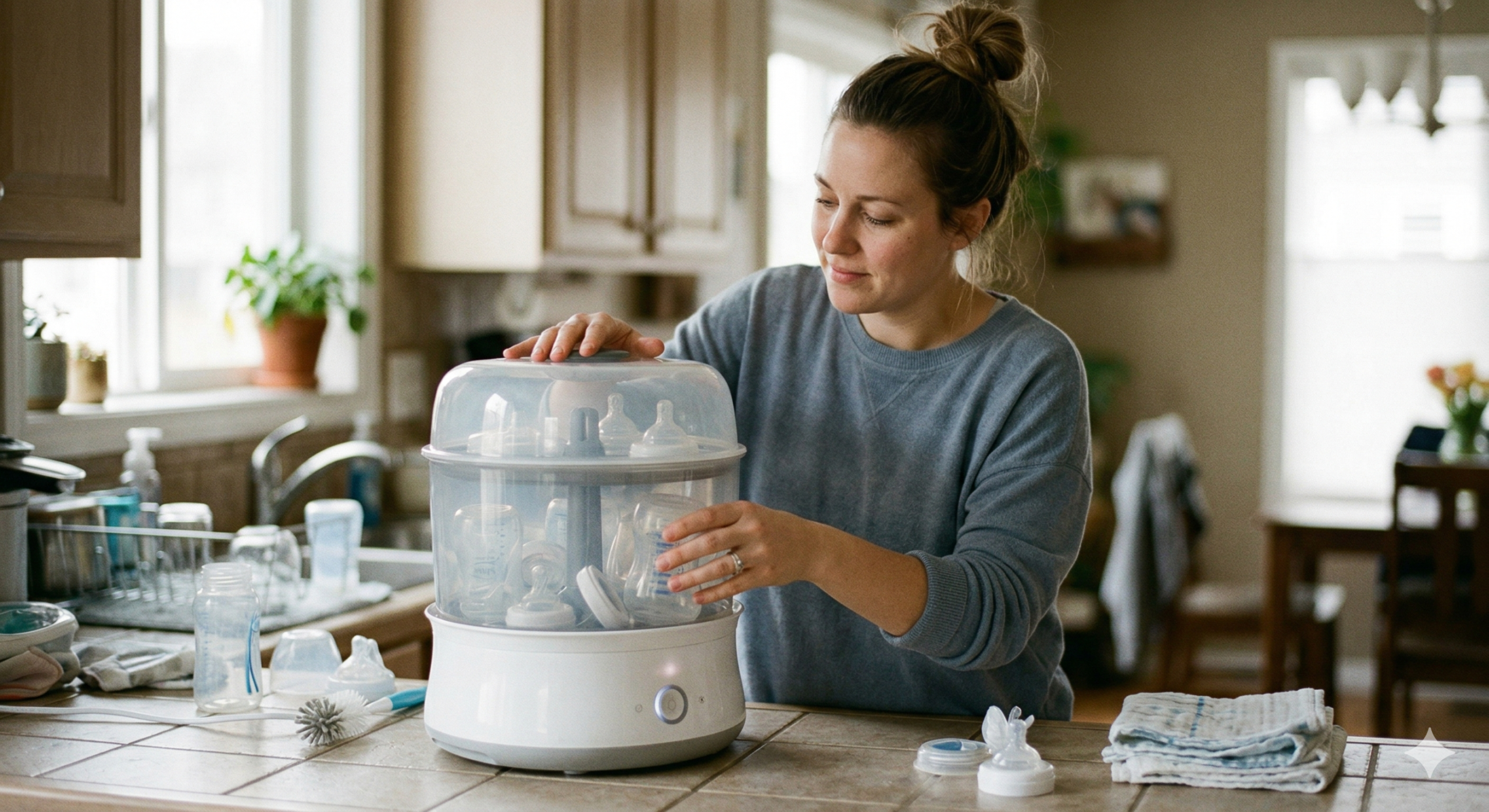
Electric Steam Sterilizer
Designed for heat resistant materials that can withstand temperatures above 100 deg celsisus such as glass, stainless steel and silicon. This method heats water to create hot steam to kill 99.9% of bacteria and is the most popular and practical.
Pros
- Highly effective in killing bacteria
- Many models include the drying and storing functions
Cons
- Can be bulkier than other options
- Requires descaling especially in humid climates
- Drying cycles can be long
- Not suitable for toys that contain non-heat resistant materials
Suitable for: Intense daily use and parents who want the most practical feature with convenience and are ok with maintenance once in awhile
UV Sterilization (Most Modern & Versatile)
This method uses ultraviolet light to eliminate bacteria and viruses without heat or water.
Pros
- Kills bacteria without heat or water
- Gentle on the bottle nipples and bottles
- Many models include the drying and storing functions
- No descaling needed
- Sterilizing items beyond bottles Eg. toys
Cons
- Can be more expensive than other options
- Bulbs may require replacement overtime
Suitable for: Parents who are concerned with material longevity, who prefers a low-maintenance and may prefer sterilizing items beyond just bottles
Microwave Sterilization (Fastest & Cheapest)
Microwave sterilizers usually offers smaller capacity compared to electric sterilizers. Parents need to note of the materials used in drying as metals are strictly prohibited.
Pros
- Fast process (typically 5-10mins)
- Affordable and compact
- Uses steam, so effectiveness is similar to electric steam sterilizers
- No descaling needed
- Sterilizing items beyond bottles that are microwave safe Eg. silicon toys
Cons
- No drying function and bottles come out wet which takes more time before you can use and air drying runs the risk of less sterile bottles
- Limited capacity
Suitable for: Smaller households or parents with limited budget
Manual boiling
Boil the bottle in a pan of boiling water for 5-10 minutes.
Pros
- Cheapest method and accessible anywhere
Cons
- Time consuming and manual effort
- No drying function
- Repeated boiling may cause silicone nipples to wear out faster over time
- Small risk of bottle warping if it comes into direct contact with the hot pan, though most modern bottles are designed to withstand boiling temperatures.
Suitable for: Emergency or rare use or parents who prefer a low-cost, no equipment option
Drying Function
Hot Air Drying (fan assisted drying)
This is one of the most common features in the best bottle sterilizer models.
- Uses a built-in fan and heating element to circulate hot air
- Dries bottles evenly, including hard-to-reach areas
- Typically takes 30–60 minutes (depending on load size and temperature)
Pros
- Dries bottles completely (including inside nipples)
- Reduces moisture which lowers bacterial growth risk
- Convenient “ready-to-use” bottles
Cons
- Takes time (30–60 mins typical) depending on load size and temperature
- Some cheaper models dry unevenly
Suitable for: Anyone who wants hands-off convenience
Adjustable Drying Settings
Allows you to select drying duration (e.g., 30, 45, 60 minutes)
Pros
- Flexible drying duration depending on load size
- Energy saving where full drying isn’t required
- Good option for humid environments/climates as you can extend the drying time where needed especially during rainy days etc.
Cons
- Requires some trial and error to get the right duration for the number of bottles
- More complex than other modes and with the wrong settings could result in bottles remaining damp
Suitable for: Parents in humid climates (like Singapore), who have varying mixed loads and want more custom control
Filtered Air Drying
- Air passes through a filter before drying
- Removes dust, bacteria, and airborne particles
- Keeps bottles sterile even during the drying process
- Considered as more hygienic and better for allergy-sensitive babies
Pros
- Filters out most bacteria and airborne contaminants
- Usually paired with storage mode
Cons
- More expensive upfront
- Requires filter replacement every ~6 months
- Slightly bulkier
Suitable for: Newborns with weaker immune system or more prone to allergies and parents who want maximum hygiene
Natural Air Drying (Passive Drying)
Pros
- Cheapest option
- No maintenance required
Cons
- Slow to dry
- Higher risk of recontamination from air
- Requires clean environment
Suitable for: Budget conscious parents and parents with clean environments at home
The 4 Best Bottle Sterilizers in 2026
Best All- Rounder: Philips Avent Sterilizer & Dryer Premium (SCF293/01)
Drying method: Filtered air drying | Sterilization method: Electric steam | Capacity: up to 6 bottles, parts and accessories | Cycle time: 40 minutes | Dimensions: 12.0 x 7.5 x 14.9 inches
BEST FOR: Parents who want a reliable, well-designed all-rounder from a trusted brand.
The SCF293/01 contains a filtered hot air drying, which means you can store your bottles in a clean environment and ready for use. We own a ragdoll cat and this means that the house is usually filled with cat fur flying around and the storage is a feature that we can appreciate.
It is also surprisingly compact for a sterilizer that contains both sterilizing and filtered air drying function. It has a sleek aesthetic design and measures just 12.0 x 7.5 x 14.9 inches. For land scarce Singapore, this is a life saver because our kitchens are usually one of the most cramped areas in the house. In terms of its capacity, it can fit about 6 bottles, so even with a compact size, it is still able to fit in a sizeable number of bottles.
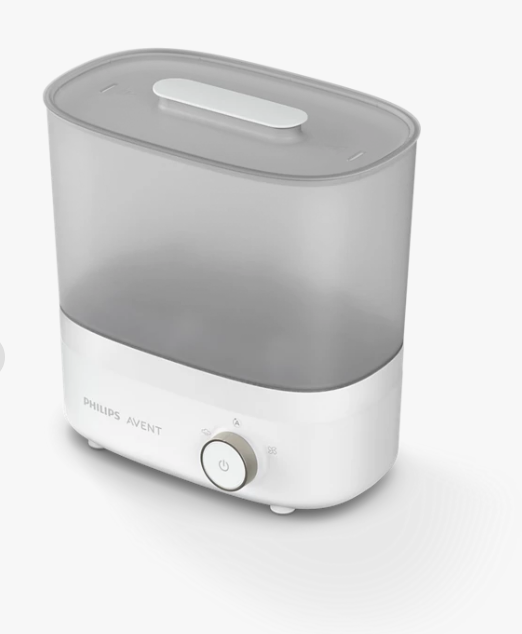
The Philips Avent sterilizes in 10 minutes (about the industry average) and dries in 30 minutes (considered pretty fast) which means you can in theory, be ready to use the bottles in just 10 minutes which can be pretty handy if you have a wailing baby and you need to use the bottles urgently. In our tests, we noted that sometimes the items are not completely dry especially for the items in the upper tray (since this is modular), and we had to take a few cycles to make it completely dry.
You can also easily clean the SCF293/01 by removing the drip tray and washing it thoroughly with water making it easy to maintain. In its storage mode, it can store up to 24 hours sterile environment by just keeping the lid on.
Pros
- Very fast drying and sterilization
- Sleek design
- Filtered air drying
- Compact
Cons
- Drying still leaves a little moisture
- Descaling maintenance
- Not the largest capacity
- Not the cheapest option but with Shopee discount is ok
Best Splurge Pick: Baby Brezza Superfast Sterilizer & Dryer
Drying method: Hot air drying | Sterilization method: Electric steam | Capacity: up to 6 bottles plus accessories (eg. 2 full pump part sets and others including pacifiers etc) | Cycle time: 10 minutes | Dimensions: 11.3 x 12.5 x 13.5 inches
BEST FOR: Busy parents who want speed and capacity without compromise
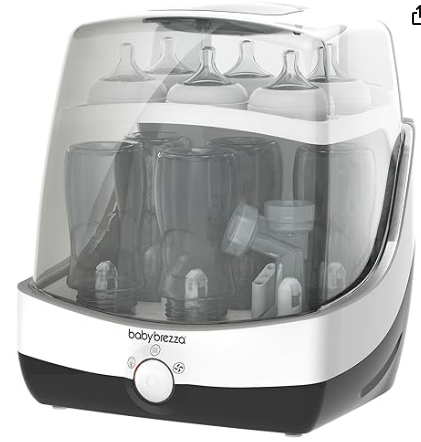
The Baby Brezza SuperQuick lives up to its name. A full sterilize-and-dry cycle finishes in just 10 minutes — the fastest combo on this list by a wide margin. It uses natural steam to sterilize the bottles then automatically dries them with hot air. These are very impressive statistics because a typical hot air drying already takes 30-60 minutes and Baby Brezza manages this in 10 minutes including sterilizing.
We were curious about its ability to perform to such high standards and put it to the test on sterilizing and drying a full load and in our test, it left a little water on the bottle parts and we had to dry it off in order to be fully dry. But otherwise, for the speed you get, its unbeatable.
However, it only manages to fit up to 6 bottles plus accessories which is on average side and that means you will have to make do with multiple cycles if you require more. However, due to its fast cycle time, this would not be an issue. Even with 12 bottles a day, which is a lot (assuming that your little one feeds once every 2 hours), you will only require 2 cycles and a total of 20 minutes from sterilization to drying. This is also very useful if you have twins and require double the usual bottles, you can get by with just a total of 40 minutes a day.
Four operating modes let you sterilize only (6 minutes), dry only (4 minutes), run both together or storage mode. The storage mode guarantees that the items remain sterilized within for up to 48 hours which is also longer than most models which are around 24 hours.
Do note this model isn’t the most compact one in our list and make sure that you have dedicated estate space for this. Apart from that, you have the usual descaling maintenance required as with typical steam sterilizers.
Pros
- Very fast drying and sterilization
Cons
- Drying still leaves a little moisture
- A little bigger and requires space
- Descaling maintenance
- Not the largest capacity but short cycle time makes up for it
Best Budget Pick: Papablic Baby Bottle Sterilizer & Dryer
Drying method: Hot air drying | Sterilization method: Electric steam | Capacity: up to 10 tall bottles | Cycle time: 36 minutes | Dimensions: 7.5 x 10.4 x 16.1 inches
BEST FOR: Budget-conscious parents who still want the convenience of a built-in dryer.
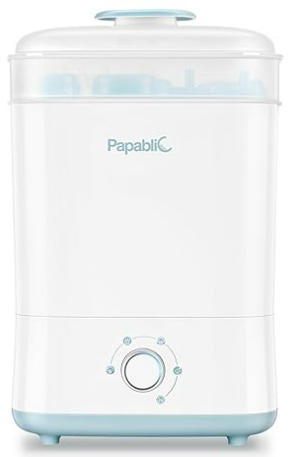
The Papablic Baby Bottle Sterilizer and Dryer stands out in its price tag. At less than $100, it packs a powerful punch in that compact shape. At just 7.5 x 10.4 x 16.1 inches, it is a little bigger than the Philips Avent but it packs 10 tall bottles or 6 wide neck bottles which is definitely a lot more than the Philips Avent. For a baby at around 6 months, they take milk on average every 3-4 hours thus in a day you require around 6 bottles and 10 bottles should suffice you for the full day.
The Papablic Baby Bottle Sterilizer uses the natural steam sterilization which is the most practical method and super hot air speed drying which is very convenient and low cost. Sterilization takes just 8 minutes and drying takes a further 28 minutes which is actually faster than the Philips Avent and can take a larger load than the Philips. Sanitized items can be stored and ready to be used for up to 24 hours. The sterilizer also as an automatic shut-off function so you never have to worry about leaving it on by accident.
During our trial, the steam felt evenly distributed and the bottles felt evenly sterilized and dried. To use it, you will have to load the base with water up to 100ml. You do not have to use exactly 100ml and it can still function as well on 60-80ml of water. The downside to this is that you have to constantly check water levels just like any other equipment that uses a steamer. You probably do not have to check it every time you use but it is good practice to check once in awhile.
Another downside through regular use in a humid environment is the lime scale buildup that forms and requires descaling but this is common with steam sterilizers.
There are also online reviews that commented that the markings on the dials are non-waterproof and could come off if you handled it with wet hands but did not seem to be an issue in our tests.
Pros
- Very low cost
- Large capacity
- Automatic shut-off function
Cons
- Descaling maintenance
- Dials are potentially non-waterproof
Best Travel Pick: 59S UV Sterilization Bag with Drying Function
Drying method: Hot air drying | Sterilization method: UV | Capacity: up to 3 bottles with accessories| Cycle time: 60 minutes | Dimensions: 9.6 x 8.3 x 7.1 inches (245mm x 210mm x 180mm)
When it comes to travel pick, we are extremely particular because we love to travel and we can attest to the quality of the 59S. What caught our attention was how aesthetically well designed it was. It comes in a nice pink shade which is very soft and appealing and also has a nice PU leather that is pleasing to the touch. It is also very portable and lightweight and suitable for traveling.
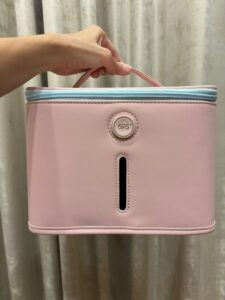
With its compact size of jsut 9.6 x 8.3 x 7.1 inches, it can easily fit into your luggage bag and even cabin size bag. A tip is to just place your bottles into the bag so that you save the space. Also as it is a squarish shape, it is very space efficient in your luggage bags.
Even with such a compact size, we found that we were still able to fit in 3 bottles and their accessories. However, due to the 60 minutes cycle time (3 minutes sterilization and 57 minutes drying), you should plan your schedule of drying and sterilizing because we found that when traveling, we had limitations to how frequently we could return to our hotels to wash, sterilize and dry the bottles. Sometimes we returned to the hotel having used all our bottles for the day and our little one cried for milk and we were not able to sterilize and dry quickly enough.
This should be an expected tradeoff for such a compact traveling sterilizer and just requires you to either bring more bottles or plan your time well.
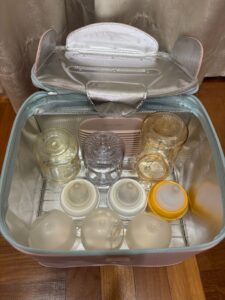
Generally we found the drying and sterilizing to be pretty reliable and no issues with moisture remaining after the drying. It is also very easy to use – it comes with a tray and you just place the bottles and its accessories on the tray and press the only button on the side of the sterilizer twice to start the sterilization and heating. The indicator light will flicker as it completes the process. And when complete, the light stops flickering and remains on, so it is very clear when it is complete and does not create any confusion.
We found the indicator light to be a little bright and the sound of the cleaning to be a little loud (can be treated as white noise) and that is because the hotel rooms are compact and proximity between our baby and the sterilizer is pretty close. So, you should try to direct the indicator light away from your baby and in a corner of the room.
Maintenance is easy with the inner wall lined with aluminum foil so you can easily dry it off and the stainless steel rack is easily removed to clean as well.
Pros
- Very low cost
- Reliable drying and sterilizing
- Shape and size fits well with luggage
- Aesthetically pleasing
- Easy maintenance
- Compact
Cons
- Small capacity
- Noise and indicator light
- Long cycle time
Our Verdict for the Best Bottle Sterilizer
For most parents, we’d recommend starting with the Philips Avent — it hits the sweet spot of price, features, and reliability. If budget is tight, the Papablic is excellent value. And if you need one for your next travels, then consider the 59S in pink.
No matter which one you choose, your baby’s bottles will be safe, clean, and ready for the next feed.
If you are looking for an all in one sterilizer (washer, sterilizer and dryer) we will be making a separate post on this. Stay tuned!
Frequently Asked Questions
How often should I sterilize baby bottles?
Sterilize before first use — always. After that, the NHS recommends sterilizing after every use until baby is 12 months old. The AAP says daily sterilizing is most important for babies under 2–3 months, preemies, or immunocompromised infants. For older, healthy babies, thorough washing may be enough.
When can I stop sterilizing bottles?
Most guidelines suggest at least until 12 months. After that, your baby’s immune system is generally strong enough that regular washing with hot soapy water is sufficient — provided your tap water is safe.
Can I sterilize breast pump parts in a bottle sterilizer?
Yes! Most electric steam sterilizers have space for pump parts. Models like the Baby Brezza SuperQuick explicitly fit two full sets of pump parts.
Is a sterilizer with a dryer worth it?
In our opinion, yes. Bottles that come out of a sterilize-only unit are wet, and bacteria can settle on them while air-drying. A dryer (especially one with a HEPA filter) keeps items clean and ready to use straight away.
Do I need to descale my sterilizer?
Yes. Over time, mineral deposits from tap water build up on the heating element. Most manufacturers recommend descaling monthly with white vinegar or citric acid. You can also use distilled water to reduce buildup.