Figuring out how to choose a baby stroller can feel completely overwhelming. Walk into any baby store and you will see dozens of options, each claiming to be the best. This is the same even when shopping online. Some of them cost astronomical others fold seventeen different ways. And somehow, you are supposed to just *know* which one is right for your family when you have your first newborn.
Take a breath. You do not need the fanciest stroller on the market. You need the right stroller for your life.
I put together this baby stroller buying guide to cut through the noise. No brand sponsorships, no sales pitches. Just the honest information you need to make a confident decision, whether you are a first-time parent or adding to your growing crew.
If you already know how to choose the right stroller and are looking for our recommendations, see our compact stroller picks.
Let’s walk through everything step by step.
Why Your Stroller Choice Actually Matters
Your stroller is one of the most-used pieces of baby gear you will own. Think about it: grocery runs, park walks, doctor visits, airport dashes, neighbourhood strolls. You will use this thing almost every single day for two to three years.
The wrong stroller leads to daily frustration. A stroller that is too heavy means dreading trips out. One that does not fit in your car means awkward wrestling matches in the parking lot. A flimsy model means replacing it within months.
The right stroller? It makes leaving the house with your baby feel easy. And when things feel easy, you are actually more keen to use them. That means more outings, and more confidence as a new parent.
What to look for in a stroller
1. Weight and Portability
This is the single most underrated factor. A stroller can have every bell and whistle, but if it is too heavy for you to lift comfortably, you will resent using it.
Under 15lbs: Easy to carry one-handed. Great for travel and public transport
15-20lbs: A solid middle ground for everyday use
Over 20lbs: Best if you rarely need to carry or lift it.
2. Fold mechanism
You will fold and unfold your stroller hundreds of times. A frustrating fold will drive you mad while a simple fold will make you enjoy your product so much more.
One-hand fold: Essential if you will be carrying your baby while folding
Self-standing fold: Stroller stands upright when folded, so you can park it in a closet without it toppling over
Compact folded size: Measure your car boot before buying and if buying for travel, make sure that it is cabin size!
3. Wheels and Suspension
Having good wheels will make the rides smoother and less squeaky with lower maintenance and greater maneuverability.
Rubber or foam wheels: Low maintenance, good for smooth pavements and shopping centres.
Air-filled (pneumatic) wheels: Smoother ride on rough surfaces, but can get punctures.
Larger wheels: Better for uneven terrain.
Swivel front wheels: Easier to steer. Look for ones that lock straight for rougher ground.
Suspension: Absorbs bumps and keeps your baby comfortable. Important if you walk on uneven paths
4. Canopy and Sun Protection
Babies have sensitive skin, so a good canopy matters more than you might think. Below are a few variations of canopies that different brands and models may have. My personal favourite is the peek-a-boo window style because I generally bring my baby out in the late evenings or early morning when the sun is less strong and I also ensure that it isn’t raining before I head out.
Extendable canopy: Look for multiple positions, ideally with a zip-out extension for full coverage.
UPF 50+ fabric: Blocks harmful UV rays.
Peek-a-boo window: A mesh or magnetic panel so you can check on your baby while walking.
5. Storage Basket
You will be carrying nappies, bottles, snacks, a change of clothes, your bag, and who knows what else. A generous, easy-to-access storage basket is a genuine quality-of-life upgrade. Check that you can reach the basket without tilting the stroller or removing the seat. Some baskets look spacious but are nearly impossible to access.
6. Harness System
A five-point harness (straps over both shoulders, around the waist, and between the legs) is the safety standard. It distributes force evenly and prevents your child from climbing or sliding out.
Make sure the harness:
– Is easy for you to buckle and unbuckle (but not easy for your toddler to escape)
– Has padded straps for comfort
– Adjusts as your child grows
7. Recline positions
Newborns need a near-flat recline (ideally 150 to 180 degrees) because they cannot support their heads.
Older babies benefit from an upright position so they can look around.
Multiple positions let your baby nap comfortably on the go and sit up when awake.
If you plan to use the stroller from birth, a full recline or compatible bassinet attachment is non-negotiable.
8. Handlebar
An adjustable-height handlebar is especially important if you and your partner are different heights. Pushing a stroller at the wrong height causes back and wrist strain. Also consider whether the handlebar is reversible (allows parent-facing mode) if that matters to you.
9. Seat Size and Weight Limit
Babies grow fast. Check the stroller’s maximum weight limit (most range from 50 to 65 lbs) and ensure the seat is wide and tall enough for a bigger toddler. A stroller your child outgrows at 18 months is a waste.
10. PRICE
This is arguably the most important factor to any parent choosing their first stroller. Not everyone wants to spend more than $1000 on a stroller and personally, this was the number 1 factor for me. However, I acknowledge there are parents out there who will go to any length to get the best comfort and safety for their precious one. Hence we will include this as a consideration in our product reviews.
Types of Strollers Explained
Before looking at features, it helps to understand the main categories. Here is a plain-English breakdown of each type and who it is best for.
Full-Size strollers
These are your all-rounders. They have sturdy frames, large wheels, generous canopies, big storage baskets, and multiple recline positions. Most can handle a newborn (with full recline or bassinet attachment) all the way through toddlerhood.
Best for: Families wanting one reliable stroller for everyday use
Trade-off: Heavier (typically 20-30 lbs) and bulkier when folded
Lightweight and Umbrella Strollers
Lightweight strollers generally weigh under 15 lbs and fold down compactly. Traditional umbrella strollers are the most basic version, with curved handles and minimal features. Modern lightweight strollers split the difference, offering better canopies, recline, and wheels while staying easy to carry. These forms of strollers take less effort to take in or out of your car trunk or bringing it on public transportation. Some of these strollers can be folded up and fit into the overhead airplane compartments making them suitable for travel.
However, an important thing to note regarding lightweight strollers are that many of them sit upright and do not recline enough, making them unsuitable for newborns as newborns cannot hold their heads up and need to lie flat for spine support. So unless you find one that can lie flat, I would not suggest one for your newborn.
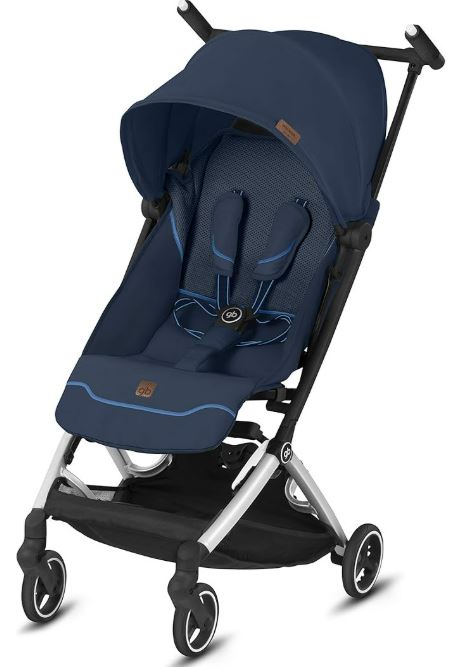
Best for: Travel, public transport, quick errands, or as a second stroller
Trade-off: Less cushioning, smaller canopies, and most are not suitable for newborns
Jogging Strollers
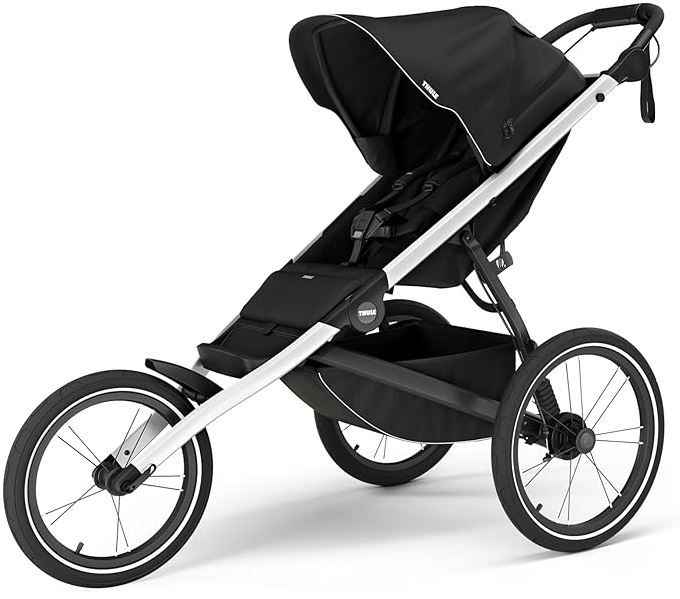
Built for active parents, these have three large air-filled wheels, enhanced suspension, a fixed or lockable front wheel, and a hand brake. They are designed to stay stable and smooth at running speeds.
Best for: Parents who run, jog, or frequently tackle rough terrain like gravel paths and trails.
Trade-off: Bulky, heavy, and not ideal for tight spaces like shops. Most manufacturers recommend waiting until baby is 6 to 8 months old before jogging with them when they can hold their head steady and better able to handle the movement that comes with jogging
Travel system strollers
A travel system bundles an infant car seat with a compatible stroller frame. The car seat clicks directly onto the stroller, so you can move a sleeping baby from car to stroller without disturbing them and you can use them right from birth.
Planning to fly with your travel system? See our guide on baby travel essentials for your first flight for tips on gate-checking, boarding strategy, and what to have ready at your seat.
Best for: Newborn parents who drive frequently and want a seamless car-to-stroller transition.
Trade-off: The combined system is heavy and bulky. Many parents phase out the car seat attachment by 6 to 12 months and wish they had a lighter stroller.
Double and Tandem Strollers
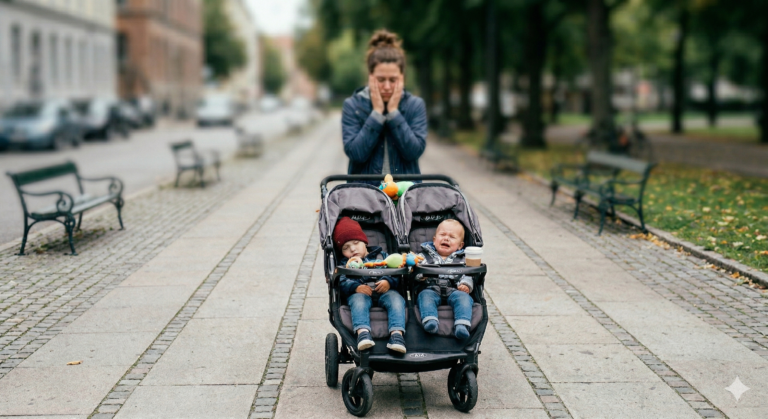
Double and tandem strollers come in two layouts:
Side by side: Both children sit next to each other. Great for interaction, but wider and harder to fit through doorways.
Tandem (front-to-back): Children sit in a line. Narrower and easier to navigate, but the rear child has a limited view.
There are also strollers that starts with one seat and have the option and ability to add another for a second child which is great if you are expecting another and prefer that flexibility.
Best for: Twins or siblings close in age.
Trade-off: Heavy, wide, and harder to manoeuvre. Consider whether you truly need one, or if a stroller board attachment for your toddler might work instead.
Convertible and Modular Strollers
These versatile models let you swap seats, add a second seat, attach a bassinet, or change the seat direction (parent-facing vs world-facing). They grow with your family.
Best for: Parents who want flexibility and plan to have more children.
Trade-off: Higher upfront cost. Can be heavy with all attachments.
Safety: What Every Parent Needs to Know
Braking system
– Brakes should be easy to engage with your foot (not your hand, which should be on the handlebar).
– Test that the stroller stays completely still on a slight incline when the brake is locked.
– Dual rear-wheel brakes (linked by a single bar) are the most reliable design.
Stability
– A wider wheelbase is more stable.
– Avoid overloading the handlebar with heavy bags, as this can tip the stroller backwards.
– If the stroller has a standing platform or second seat, check that the weight distribution remains safe when loaded unevenly.
Material safety
For newborns especially, look for fabrics that are free from harmful chemicals. Certifications like OEKO-TEX Standard 100 indicate the fabric has been tested for substances that could be harmful to babies.
Age and stage: Matching the stroller to your baby
Newborn (0-6 months)
Newborns cannot hold their heads up and need to lie flat or nearly flat. Your options include:
– A stroller with a full recline (close to 180 degrees)
– A stroller with a bassinet attachment
– A travel system that lets you click in an infant car seat
Avoid placing a newborn in an upright stroller seat, even briefly. Their airways can be restricted in a chin-to-chest position.
Infant (6-12 months)
By about six months, most babies have enough head and neck control to sit in a standard stroller seat. This is when you have the most options. A stroller with multiple recline positions is ideal since babies this age still nap frequently.
Toddler (12 months and above)
Toddlers are heavier, wriggly, and opinionated. You need:
– A stroller with a higher weight limit
– A secure harness they cannot easily escape
– A durable frame that can handle daily wear
This is also the stage where a lightweight or umbrella stroller becomes genuinely useful as a second option for quick outings.
Wrapping up: trust yourself
Choosing a baby stroller does not have to be stressful. Now you know the types, the features that actually matter, the safety essentials, and how to match a stroller to your real life. You are more than equipped to make a great choice.
Remember: the best stroller is not the most expensive one or the most popular one. It is the one that fits your family, your routine, and your budget.
Start with your lifestyle, set your priorities, and trust your judgement. You have got this.





3 Comments