Nobody warns you about the hunger. The best foods while breastfeeding aren’t about eating perfectly — they’re about eating smart when you’re already running on no sleep and keeping a human alive.
The best foods while breastfeeding aren’t about eating perfectly. They’re about eating smart — and not running on empty when you’re already running on no sleep.
And here’s the foods to avoid while breastfeeding — and a few that are actually fine.
Why What You Eat Actually Matters Right Now
Breastfeeding burns 300–500 extra calories a day. Your body is remarkably good at protecting your milk quality even when your diet isn’t great — but that protection comes at a cost to you. Low energy, slower recovery, mood dips. Eating well isn’t just for your baby. It’s for you.
Wondering why you’re so hungry when breastfeeding? Find out how many calories you actually burn while breastfeeding.
The Foods Worth Actually Prioritising
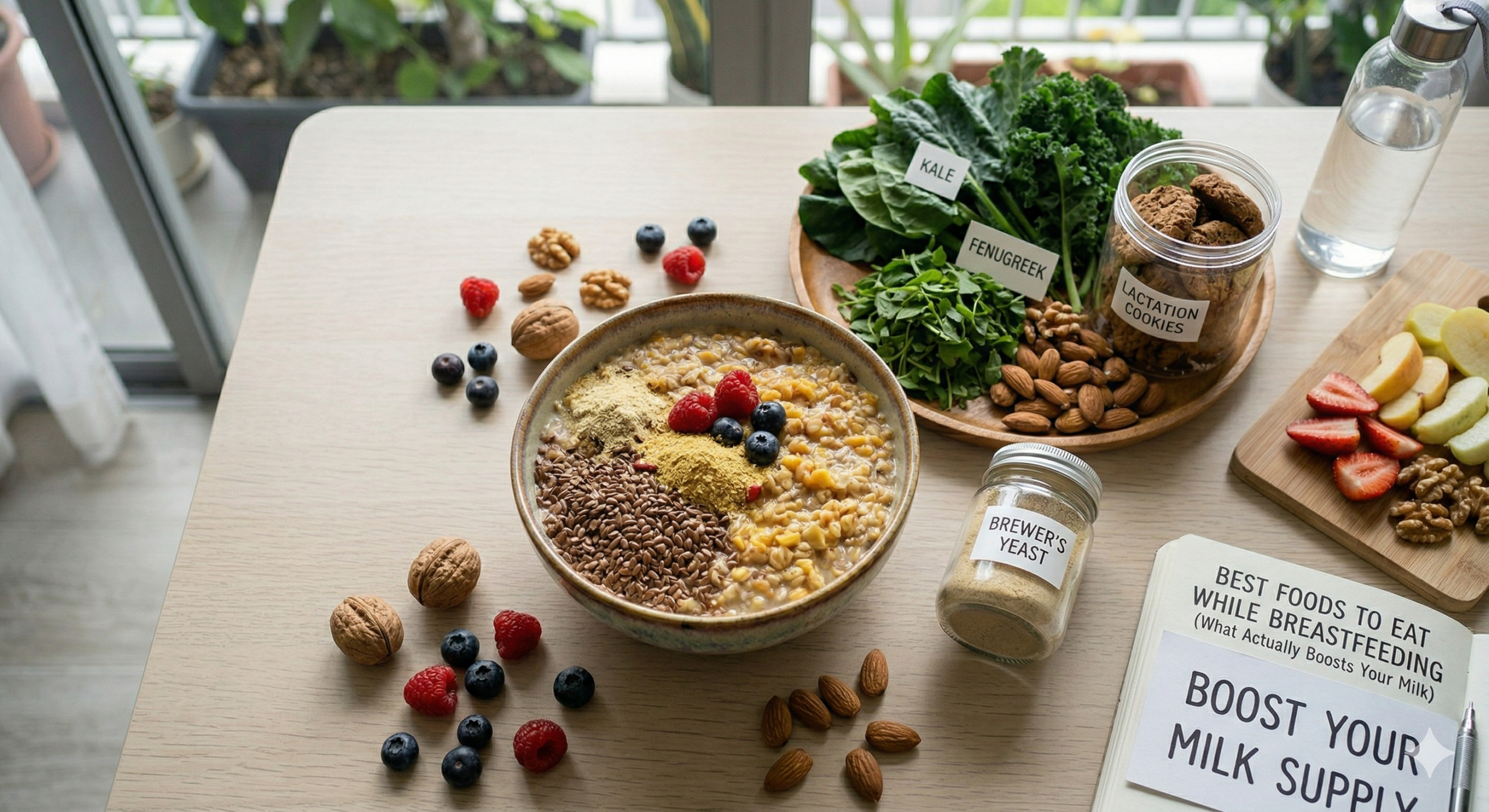
Oats — start here If you do nothing else, eat oats for breakfast. They contain beta-glucan, which may boost prolactin levels (the hormone that drives milk production). The evidence isn’t rock solid, but oats are also filling, cheap, and easy — so there’s no reason not to.
Salmon and fatty fish — yes, again The DHA in fatty fish shows up directly in your breast milk, and your baby’s brain is being built right now. Two servings a week of salmon, sardines, or trout makes a real difference. Just stick to low-mercury options and you’re good.
Eggs — underrated Eggs are one of the best sources of choline, which is critical for your baby’s brain development and genuinely hard to get enough of from other foods. Eat them however you like — they all count.
Leafy greens — not as boring as they sound Spinach, kale, broccoli — they’re packed with calcium, iron, and folate. They won’t magically boost your supply, but they support the nutritional foundation that good milk production depends on. Throw them into whatever you’re already cooking.
Legumes — the underdog Chickpeas, lentils, beans. High in protein, iron, and fibre. Some cultures have used chickpeas as a milk booster for centuries. The science is limited but they’re genuinely nutritious and ridiculously versatile.
Nuts and seeds — snack smarter Keep almonds on your desk. Throw flaxseeds into your smoothie. Almonds are high in calcium and healthy fats. Flaxseeds contain phytoestrogens that some research links to milk production. Either way, they’re better than biscuits at 3am.
Stay Hydrated
Water — not a food, but the most important thing on this list Breast milk is 90% water. If your supply suddenly drops, dehydration is the first thing to check — before you panic about anything else. Drink a glass every single time you feed. Keep a bottle at your nursing spot. Make it automatic.
What About Lactation Cookies?
They’re everywhere, and they’re mostly fine. The active ingredient in most is fenugreek, which has mixed evidence — some women see a real difference, others nothing, and a small number actually see supply drop. If you want to try them, go ahead. Just don’t use them as a substitute for actually eating well.
A Realistic Daily Template
Not a meal plan — just a rough shape for a day that covers your bases:
- Breakfast: Oats with nuts and fruit
- Lunch: Eggs or protein with something green
- Dinner: Fatty fish or lean meat with vegetables
- Snacks: Almonds, yoghurt, whatever’s quick
- All day: Water. Seriously.
Those first few weeks of breastfeeding can be a shock — here’s what else no one tells you before having a baby
TL;DR
You don’t need a perfect diet. You just need a good enough one, consistently. Start with oats, eggs, and salmon, drink more water than you think you need, and go from there.





4 Comments